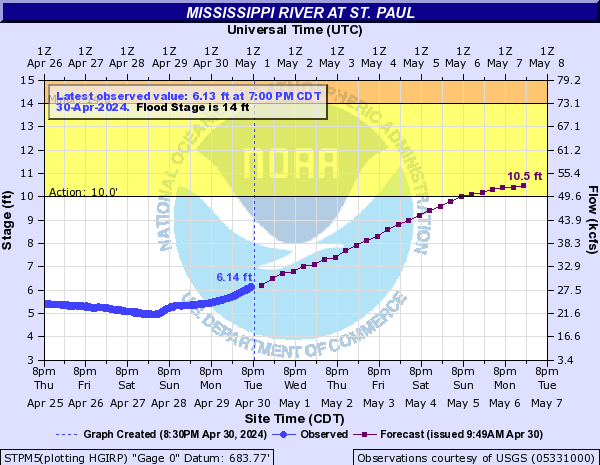
Flood Forecast from the National Weather Service
For the most up to date flood forecasts, and updated flood forecast view, please visit the National Weather Service website.
Last Edited: September 6, 2024
For the most up to date flood forecasts, and updated flood forecast view, please visit the National Weather Service website.

City of Saint Paul Emergency Rehab Loan Program – Low- and moderate-income homeowners who owner-occupy & homestead their property located in Saint Paul might be eligible for an emergency rehab loan. The loan is 0% interest with a 15-year term, forgiven at 1/15th annually. Eligible homeowners can get up to $40K to be disbursed directly to contractors once work is complete. Submit an intake form to see if you qualify.
Minnesota Housing Fix Up Home Improvement Loan Program – This state program offers fixed interest rate financing in amounts $2K-$75K for a term of 1-20 years. The program is designed to support with most kinds of home improvements and borrowers can perform the work on their own if already skilled in the trade needed.
Minnesota Housing Rehabilitation Loan Program – This state program assists low-income homeowners in financing home improvements that directly affect the safety, habitability, energy efficiency or accessibility of their homes.
Minnesota Housing Emergency & Accessibility Loan Program –This state program is available for home improvements that address emergency conditions of the home or accessibility needs for a household resident with a disability.
Non-profit organizations that provide free or low-interest resources for low- to moderate-income homeowners & renters
Energy Cents Coalition (1-4 units)
Multifamily Energy Solutions by CenterPoint Energy & Xcel Energy (5+ units)
Community Development Finance Institutions (CDFIs)
Contractors
Emerging and small businesses, and enterprises owned by women and minority communities.
Consolidated across Saint Paul, Minneapolis, Hennepin County, and Ramsey County to centralize contractor opportunities.
U.S. Dept of Housing and Urban Development guide on fixing up your home (provided for contractor due diligence tips, ignore FHA financing details at end)
City of Saint Paul Fire Department Project Safe Haven
Saint Paul Regional Water Services (SPRWS) Lead Free Saint Paul program
Xcel Energy wants to help your family stay safe in the event of flooding. It’s also taking steps to ensure its facilities can continue delivering reliable service if flooding occurs.
If flooding happens in your area, to help keep you safe, Xcel Energy may need to disconnect electric or natural gas service to some customers. You should not attempt to disconnect electricity or natural gas service yourself.
Visit Xcel Energy’s website to learn more about flood safety and preparations, or contact their Customer Care representatives at 800-895-4999.
FEMA's National Flood Insurance Program has information on flood insurance. Flood insurance can be purchased through your homeowner's insurance company or renter's insurance company. It typically takes 30 days to take effect, so plan ahead so you're covered when you need it.
FEMA publishes flood plain information via the National Flood Hazard Layer (NHFL). To find out more, please visit the NHFL web mapping application.
To learn more about the NHFL and other FEMA flood information, visit the FEMA Flood Map Service Center
To be eligible for federal assistance under the Disaster Relief and Emergency Assistance Act, the President of the United States needs to declare the area a Federal Disaster Area. Things to be of:
FloodSmart.gov helps you learn about flood risk and taking steps to financially protect homes and businesses from flood damage.
Disaster Assistance and Emergency Relief for Individuals and Businesses. This resource from the IRS provides information about getting financial help if you have damaged or lost property in a designated Federal disaster area.
Minnesota DNR information on flood plains
Disclaimer: The information on this page is merely a summary of flood insurance information. For more information, contact your insurance agent.
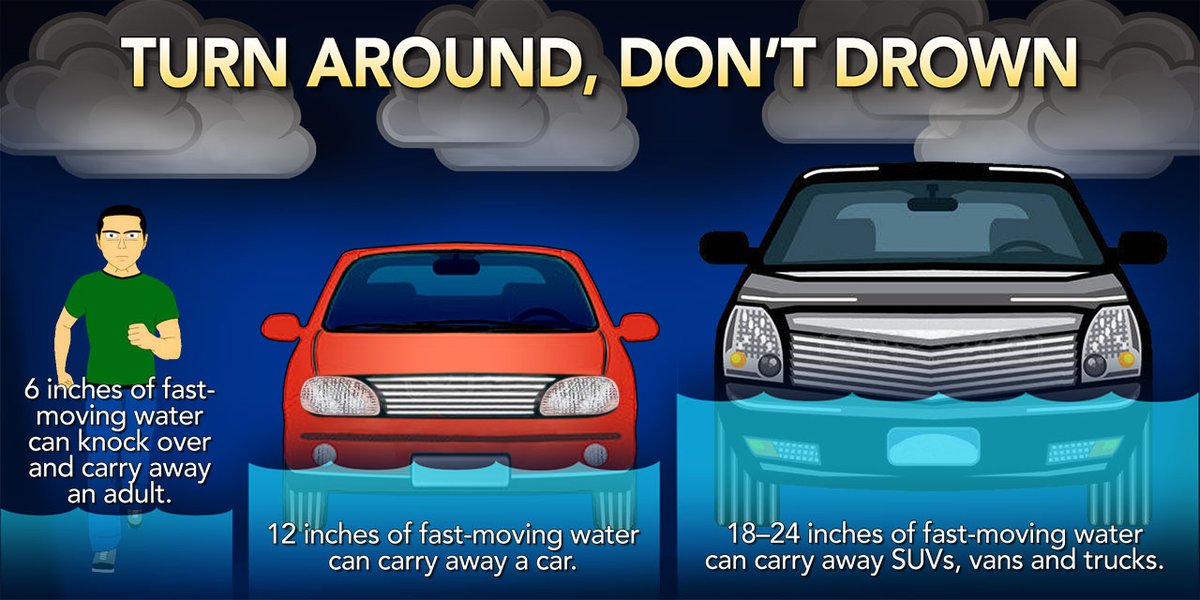
Where does this idea that "my heavy vehicle will keep me safe" come from? It comes from the false trust in the weight of the vehicle you are driving.
Many believe their 3,000 pound or more vehicle will remain in contact with the road surface, that it is too heavy to float. Think about that for a moment. Aircraft carriers weighing 97,000 tons float.
Vehicles, including ships, float because of buoyancy. In fact, most cars can be swept away in 18-24 inches of moving water. Trucks and SUVs do not fare much better with an additional 6-12 inches of clearance.

Ready.gov Flood information
Flood preparation information (CDC)
Information for recovery after the flood (CDC)
MN Department of Health Flood Information
As communities around the state prepare for spring flooding, Minnesota health officials are reminding private well owners and users of the importance of taking preventive action to reduce the possibility of their drinking water becoming contaminated by floodwaters.
Wells contaminated with floodwater pose a health risk, but the impact floodwaters have on wells and water quality are often not as visible as other flood damage. With that in mind, the Minnesota Department of Health (MDH) offers well users the following recommendations:
If your well is in a flood-prone area and you have time, consider contacting a licensed well contractor to check your well and make any necessary repairs or changes to help protect it from flooding. These changes may include repairing cracked or damaged casing, extending the well casing above the expected flood level or temporarily replacing the vented well cap with a watertight cap or cover. You should also make sure that grading allows water to flow away from your well.
If you think your well might become flooded, store a supply of clean water that will last for at least a few days. Shut off power to the well pump to avoid having floodwater pumped into your plumbing system or home. If you only have a little time before a flood, you can cover the well with a heavy plastic bag or sheeting and secure it with electrical tape. This won’t completely protect your well from contamination, but it will help reduce the amount of water and debris that could enter your well, making clean up easier.
If floodwater reached your well, assume your well is contaminated. Water from your well should not be used for drinking, cooking or brushing your teeth until the floodwater recedes and the following steps have been completed:
If floodwater came within 50 feet of your well – but did not reach the well – MDH recommends that you have your well water tested for coliform bacteria as a precaution. You do not need to disinfect your well before having it tested. However, if the test comes back positive for bacteria, the well needs to be disinfected.
For well owners who need more information, please contact the Well Management Section at MDH at health.wells@state.mn.us or 651-201-4600 or 800-383-9808 or visit the Floods and Flood Precautions For Private Water Wells pages on the MDH website.
Sandbagging 101 info sheet and how to design a sandbag levee from the US Army Corps of Engineers
North Dakota State University has information online about how to build a sandbag dike, along with the proper design, location and how many sandbags you might need.